How to make it
9 steps. Take it one step at a time.
Combine the warm milk, a tablespoon of the sugar, and the yeast
In a small bowl, combine the warm milk, a tablespoon of the sugar, and the yeast. Let it sit for about 10 minutes until it becomes frothy.
10 minCombine the flour, the remaining dough sugar, and salt
In a large mixing bowl, combine the flour, the remaining dough sugar, and salt. Add the egg yolks and the yeast mixture. Mix until a dough starts to form.
Pour in the melted butter
Pour in the melted butter and knead the dough for 5-10 minutes until it is smooth, elastic, and no longer sticks to your hands.
10 minCover the bowl with a clean cloth and let the dough rise
Cover the bowl with a clean cloth and let the dough rise in a warm place for about 60 minutes, or until it has doubled in size.
1 hrPunch down the dough
Punch down the dough and divide it into 4 equal portions. On a floured surface, roll each portion out into a long, thin strip (about 1 cm or 0.4 inch wide).
Grease your chimney cake molds
Grease your chimney cake molds (or foil-wrapped rolling pins) with butter. Wrap the dough strips around the molds, overlapping the edges slightly so they stick together. Roll the mold on the table to flatten the dough slightly and seal it.
Brush the dough with more melted butter
Brush the dough with more melted butter and roll it in the sugar. Place the molds over a baking sheet so they are suspended (resting on the edges of a deep pan).
Bake in the preheated oven
Bake in the preheated oven at 190°C (374°F) for 15-20 minutes. Turn the molds every 5 minutes to ensure even browning and caramelization of the sugar.
20 minRemove from the oven and immediately roll the hot cakes
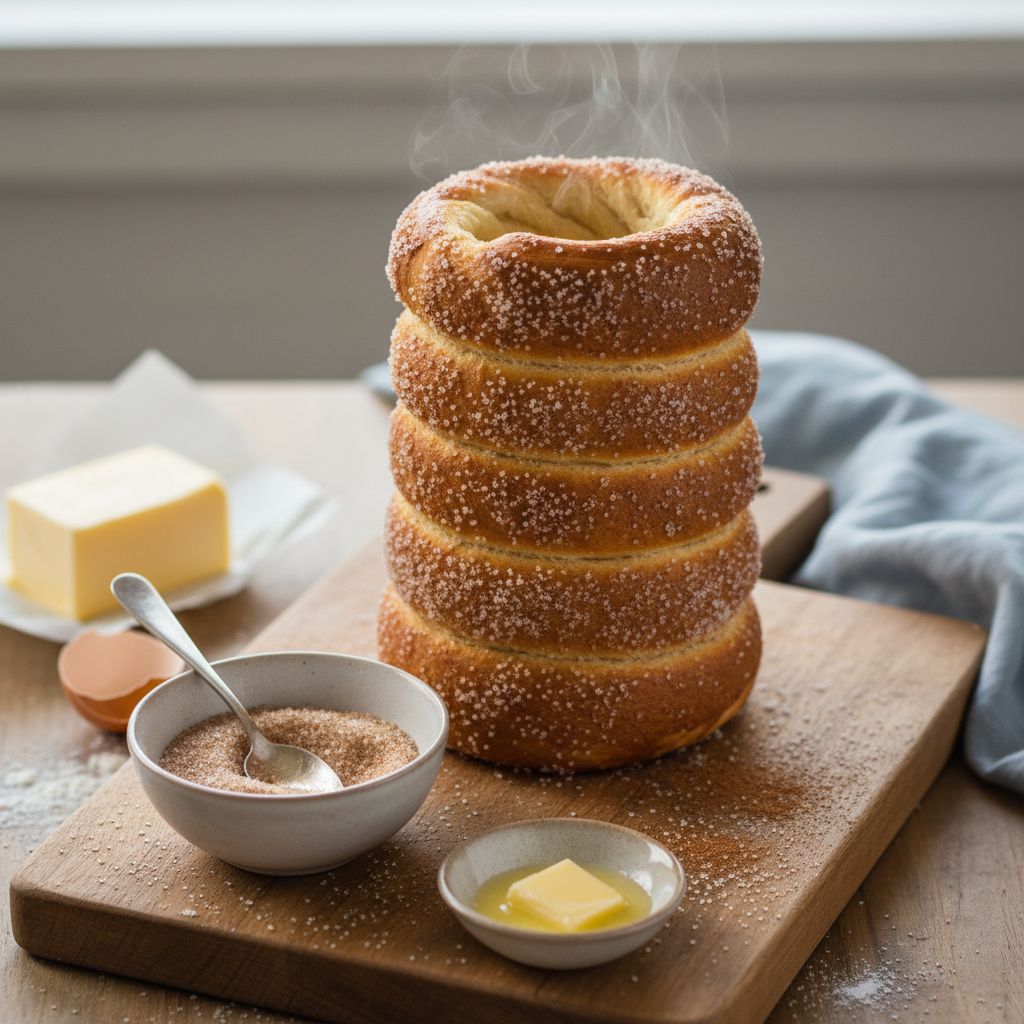
Once golden brown, remove from the oven and immediately roll the hot cakes in a mixture of sugar and ground cinnamon. Gently tap the mold to release the cake.
A little kitchen wisdom
At home, you can use a wooden rolling pin wrapped in foil as a makeshift spit. Ensure the dough is rolled thin so it cooks through evenly. Rotating the cake during baking is key to an even caramelization.