How to make it
7 steps. Take it one step at a time.
Rinse the yellow soybeans thoroughly
Rinse the yellow soybeans thoroughly. Soak them in a large bowl with plenty of water for 24 hours until they have doubled in size.
1 dayDrain the beans and place them
Drain the beans and place them in a large heavy-bottomed pot. Add fresh water and bring to a boil at 212°F (100°C). Reduce heat and simmer for 5-6 hours until the beans are very soft and can be easily mashed between two fingers.
6 hrDrain the cooked beans
Drain the cooked beans. While still hot, mash them thoroughly using a mortar and pestle or a large heavy masher until a thick paste forms with some texture remaining.
Shape the mashed soybean paste
Shape the mashed soybean paste into firm rectangular blocks (Meju). Place the blocks in a cool, airy, and shaded area. Let them dry and ferment for 1 to 2 months until they are completely hard.
30 daysPrepare a brine by dissolving the sea salt
Prepare a brine by dissolving the sea salt in 5 liters (1.3 gallons) of water. Place the dried Meju blocks into a large sterilized earthenware jar (onggi).
Pour the brine over the blocks
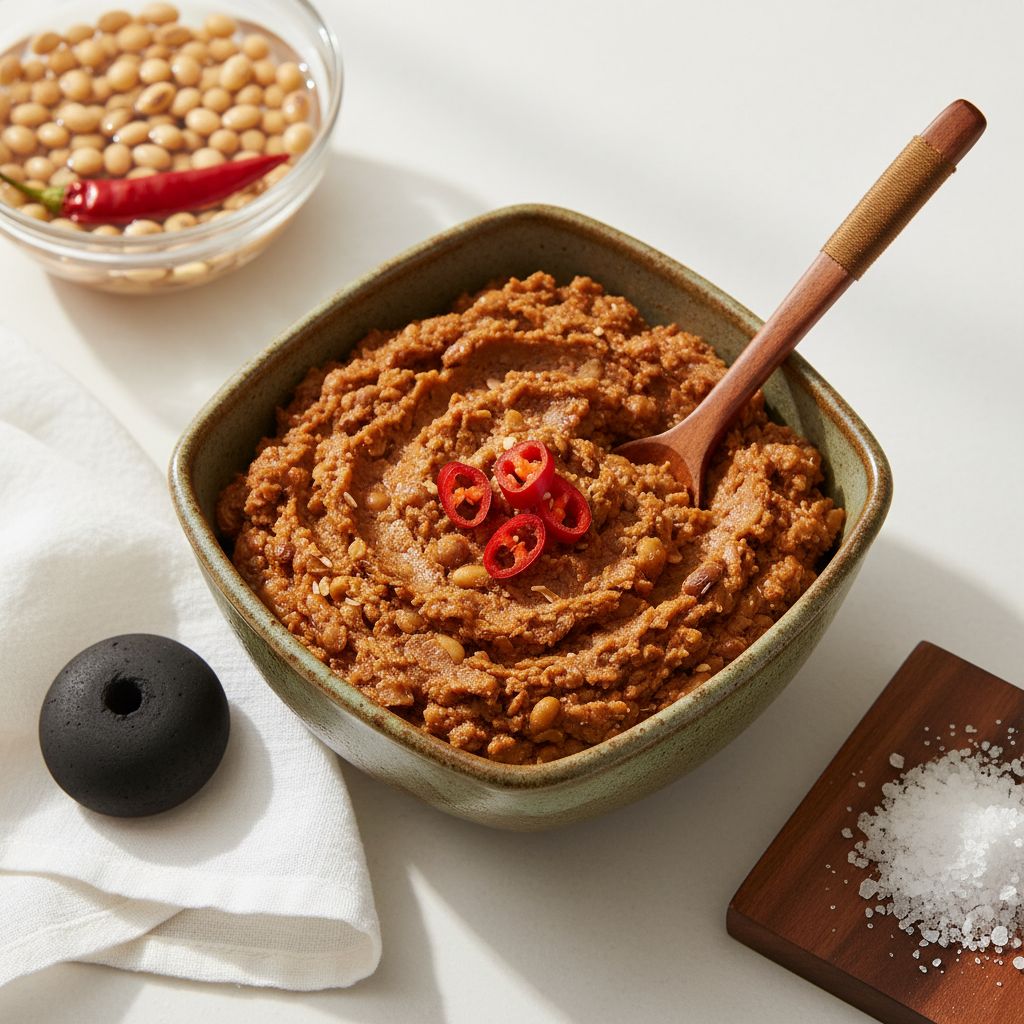
Pour the brine over the blocks until covered. Add the dried chili peppers and charcoal to the top to purify the mixture. Cover the jar with a breathable cloth or its lid and let it ferment in a sunny spot for 60 to 90 days.
60 daysAfter fermentation, separate the liquid from the solid blocks
After fermentation, separate the liquid (which is now soy sauce) from the solid blocks. Mash the soft solids into a smooth paste—this is your Doenjang. Pack it into a jar and store it in a cool place or refrigerator.
A little kitchen wisdom
Traditional doenjang is aged in earthenware jars called onggi. The longer it ages, the deeper and more complex the flavor becomes. The liquid byproduct of this process is Ganjang (Korean soy sauce).